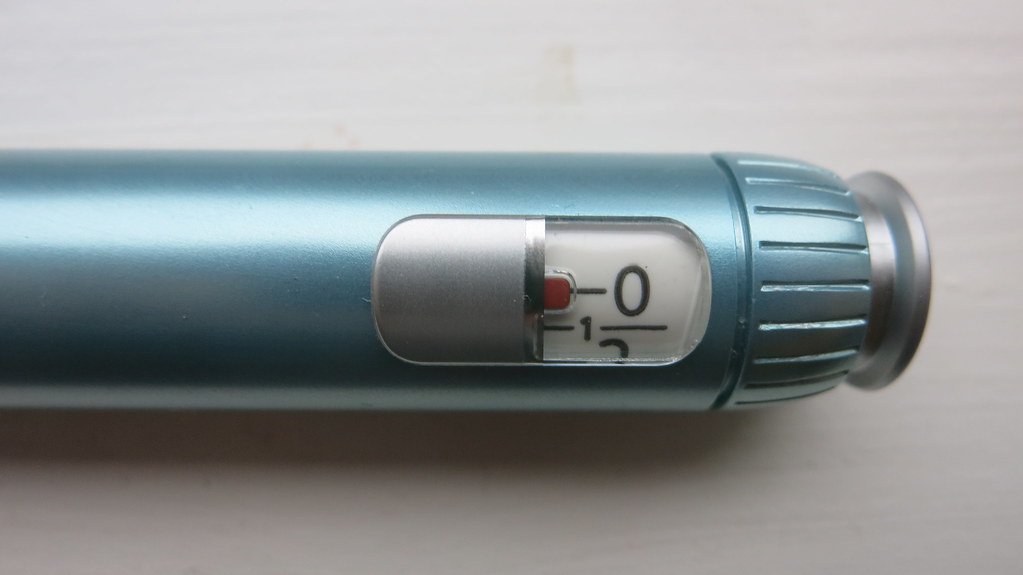
Retatrutide is an experimental weight-loss medicine from Eli Lilly, the maker of Zepbound. It is a single molecule that activates three hormone receptors: GIP, GLP-1 and glucagon. That is why it is sometimes called a “triple agonist.” [2]
It is not FDA-approved. Lilly says it plans to submit retatrutide to the FDA in the first quarter of 2027. [2] This page covers what the trials have shown as of November 21, 2026, the side effects seen so far, and what the FDA says about retatrutide sold online.
How is retatrutide different from Wegovy and Zepbound?
The approved weekly injections act on one or two receptors. Semaglutide (Wegovy, Ozempic) acts on the GLP-1 receptor. Tirzepatide (Zepbound, Mounjaro) acts on the GIP and GLP-1 receptors. Retatrutide adds a third target, the glucagon receptor, in the same molecule. [2]
It is given as a once-weekly injection under the skin. In the trials, the dose started low and increased in steps, as with the approved GLP-1 medicines. [1] [3]
What did the phase 3 TRIUMPH trials show?
Lilly has reported topline results from three large phase 3 trials that each ran 80 weeks. The figures below are Lilly’s efficacy estimand results, which estimate the effect as if every participant had stayed on treatment. They come from company announcements, and the full peer-reviewed papers are still to come. [1] [2]
| Trial | Who was studied | Average weight change at 80 weeks |
|---|---|---|
| TRIUMPH-1 | 2,339 adults with obesity, or overweight plus a weight-related condition, without diabetes | 4 mg: −19.0% · 9 mg: −25.9% · 12 mg: −28.3% · placebo: −2.2% [1] |
| TRIUMPH-2 | 1,152 adults with type 2 diabetes and obesity or overweight | 4 mg: −12.7% · 9 mg: −19.1% · 12 mg: −20.8% · placebo: −4.0% [2] |
| TRIUMPH-3 | 1,949 adults with severe obesity (BMI 35 or higher) and established heart or blood vessel disease | 9 mg: −21.6% · 12 mg: −22.6% · placebo: −3.2% [2] [10] |
A few more details from these trials:
- Counting everyone randomized, including people who stopped, TRIUMPH-1 weight loss on 12 mg was 25.0%, versus 3.9% on placebo. [1]
- Large losses were common on the top dose. In TRIUMPH-1, 45.3% of people on 12 mg lost at least 30% of their body weight, versus 0.5% on placebo. [1]
- Two-year extension. Among 532 TRIUMPH-1 participants with a BMI of 35 or higher who continued to 104 weeks, those on 12 mg lost an average of 30.3%. [1]
- Blood sugar. In TRIUMPH-2, A1C fell by 1.4% to 1.6% from an average starting level of 7.7%, versus 0.2% on placebo. [2]
- Heart events. In TRIUMPH-3, heart attacks, strokes and cardiovascular deaths were less frequent than expected in both groups. There were too few events to say whether retatrutide raises or lowers that risk. [2]
These results build on a phase 2 trial published in the New England Journal of Medicine in 2023, in which adults on 12 mg lost 24.2% of body weight at 48 weeks, versus 2.1% on placebo. [3]
What side effects did people have on retatrutide?
The most common side effects were the stomach effects seen with other medicines in this class, and they were more frequent at higher doses. In TRIUMPH-1, rates on 12 mg versus placebo were: [1]
- nausea: 42.4% vs 14.8%
- diarrhea: 32.0% vs 13.5%
- constipation: 26.1% vs 10.9%
- vomiting: 25.3% vs 4.8%
Dysesthesia is a side effect not usually listed for the approved GLP-1 medicines. It means an unusual or unpleasant skin sensation. In TRIUMPH-1 it affected 12.5% of people on 12 mg, 12.3% on 9 mg and 5.1% on 4 mg, versus 0.9% on placebo. Lilly describes these events as generally mild to moderate, mostly resolving during treatment, with most people continuing the drug. [1] Rates were lower in TRIUMPH-2 and TRIUMPH-3, at 4.5% to 7.3% on retatrutide versus 0.7% to 1.3% on placebo. [2]
Stopping because of side effects happened in 11.3% of people on 12 mg in TRIUMPH-1, versus 4.9% on placebo. [1] In the phase 2 trial, heart rate rose with the dose, peaked at 24 weeks and then declined. [3]
The FDA label, if one is issued, will set out the official warnings. Until then, these trial reports are the best source.
When could retatrutide be approved?
Lilly says it plans to submit a Biologics License Application to the FDA in the first quarter of 2027. [2] Lilly has not said when it expects an FDA decision, and the agency’s review time will depend on the pathway the FDA uses. Any date you see for approval or launch is a forecast, not an announcement.
Lilly is also studying retatrutide in knee osteoarthritis pain, obstructive sleep apnea, type 2 diabetes, heart and kidney outcomes, and fatty liver disease. [2]
Is it legal to buy retatrutide online?
No. Retatrutide is not an approved drug, so no one can legally sell it as a medicine.
- FDA warnings. The FDA says it has warned companies that illegally sold unapproved drugs containing semaglutide, tirzepatide or retatrutide that were falsely labeled “for research purposes” or “not for human consumption.” [5] One of the warning letters the FDA issued on August 24, 2026 went to a seller listing a product it called retatrutide. [6]
- No compounding. The FDA has said it is illegal for pharmacies to compound retatrutide, and an FDA spokesperson urged consumers not to use it unless they are part of a clinical trial. [7]
- Reported harms. A Public Citizen investigation counted 14 FDA warning letters to retatrutide sellers since 2024 and at least 14 reported hospitalizations linked to its use as of June 2026. [8]
- Lawsuits. Lilly filed lawsuits against six companies it says were selling retatrutide illegally. [9]
Products sold this way have no FDA review of their content, purity or dose. If you are interested in retatrutide, the legal route is a clinical trial, listed on ClinicalTrials.gov. [4] If you want a medicine you can get today, the approved options are compared in our tirzepatide vs. semaglutide guide, and our brand vs. compounded guide explains how to check whether a seller is legitimate.
The bottom line
Retatrutide produced large average weight loss across three phase 3 trials, with the familiar stomach side effects and a less familiar one, dysesthesia, that people should know about. It is not approved, Lilly plans to file in early 2027, and anything sold online today is outside the law. We will update this page when Lilly files and when the FDA acts.
This article is for education only. It is not medical advice and does not recommend any medication. Talk to your prescriber about treatment decisions.