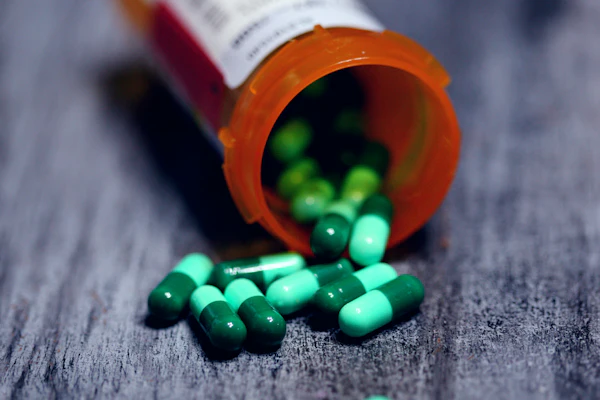
On April 1, 2026, the FDA approved Foundayo, the brand name for orforglipron, for chronic weight management in adults with obesity and in adults with overweight who also have at least one weight-related medical condition. It is the first new molecular entity approved under the FDA’s National Priority Voucher program, and the agency says the decision came just 50 days after filing. [1]
The headline is simple: there is now an FDA-approved GLP-1 weight-loss pill that is not an injection. Foundayo is a once-daily tablet, and both the FDA and Lilly say it can be taken without the empty-stomach routine that makes oral semaglutide more finicky. [1] [2] [3]
That does not mean every current Ozempic, Wegovy, Mounjaro, or Zepbound user should suddenly switch. The convenience argument is real. The efficacy tradeoff is real too. So is the insurance question. This guide is the short version for people trying to decide what this approval changes in actual life.
If you need the broader background first, read our GLP-1 receptor agonist guide. If you are comparing current injectables, keep our Ozempic vs. Mounjaro breakdown and full GLP-1 side effects guide open too.
This page covers the approval itself. For dosing details, drug interactions, and costs, see our full Foundayo guide. If you are choosing between the two weight-loss pills, read Foundayo vs. Wegovy pill.
What exactly did the FDA approve?
Foundayo is approved with a reduced-calorie diet and increased physical activity to reduce excess body weight and maintain weight reduction long term in:
- adults with obesity
- adults with overweight plus at least one weight-related comorbid condition
The FDA announcement does not say Foundayo is approved for type 2 diabetes. That matters. Someone taking Ozempic or Mounjaro mainly for glucose control should not assume this is an interchangeable on-label replacement. [1] [5]
That is still true as of October 2026. Lilly said in August 2026 that it had submitted orforglipron to the FDA for type 2 diabetes, but the current label, revised in July 2026, still lists only chronic weight management. The label also says using Foundayo together with another GLP-1 receptor agonist is not recommended. [5] [11]
The product is a GLP-1 receptor agonist in tablet form taken once daily. According to the FDA release, dosing starts at 0.8 mg, increases to 2.5 mg after at least 30 days, then to 5.5 mg after another 30 days, with optional further increases to 9 mg, 14.5 mg, or 17.2 mg based on response and tolerability. [1] [5]
How is Foundayo different from other GLP-1 medicines?
Foundayo is not just “another GLP-1.” The practical selling point is obvious:
- it is a pill
- it is taken once daily
- it can be taken with or without food
- Lilly says there are no food or water restrictions
That makes it much simpler than oral semaglutide for day-to-day use. Lilly’s patient page says Foundayo is taken once daily “on your schedule,” with or without food and without water restrictions. [3]
Storage got simpler too. The original April 2026 label told patients to protect the tablets from light by keeping them in the original bottle and carton. The July 2026 label revision removed that instruction. The label now says only to store Foundayo at room temperature, 68°F to 77°F (20°C to 25°C). [5] [9]
If your biggest barrier to GLP-1 treatment has been injections, refrigeration anxiety, or the narrow dosing routine around some oral options, this approval matters.
How much weight did people lose on Foundayo?
The most important obesity trial behind the approval is ATTAIN-1, published in the New England Journal of Medicine in 2025. This phase 3 trial randomized 3,127 adults with obesity without diabetes to daily oral orforglipron or placebo for 72 weeks. [6]
One detail trips up a lot of coverage. ATTAIN-1 tested an investigational version of the tablet, and the published paper reports its doses as 6 mg, 12 mg, and 36 mg. The FDA label describes the same trial but shows the results as the equivalent marketed Foundayo doses: 5.5 mg, 9 mg, and 17.2 mg. [5] [6]
Here is what the label reports for mean weight change at week 72:
| Trial arm in the published paper | Equivalent Foundayo dose on the FDA label | Mean body weight change at 72 weeks |
|---|---|---|
| Placebo | Placebo | -2.1% |
| Orforglipron 6 mg | Foundayo 5.5 mg | -7.4% |
| Orforglipron 12 mg | Foundayo 9 mg | -8.3% |
| Orforglipron 36 mg | Foundayo 17.2 mg | -11.1% |
The published paper’s figures are within 0.1 percentage point of the label’s (-7.5%, -8.4%, and -11.2%). Lilly’s April 1, 2026 approval announcement adds that participants on the highest dose lost 11.1% on average regardless of trial completion and 12.4% if they stayed on treatment. [2] [5] [6]
Correction (October 2026): an earlier version of this page said the 36 mg trial arm did not match an approved dose and pointed readers to the 12 mg arm instead. The FDA label reports the same trial in equivalent Foundayo doses, and its top-dose result (17.2 mg, the top approved dose) matches the paper’s 36 mg arm.
The top-dose arm also gives a sense of what “meaningful” looked like in the study population:
- 71.5% lost at least 5% of body weight
- 54.5% lost at least 10%
- 35.9% lost at least 15%
- 18.4% lost at least 20%
In the placebo group, those figures were 26.8%, 13%, 6%, and 2.9%. [5]
A second 72-week trial in 1,613 adults with type 2 diabetes showed smaller average losses: 9.6% on 17.2 mg versus 2.5% on placebo. [5]
That is solid efficacy. It is not fake-news efficacy. It is real weight loss over a long trial.
How does Foundayo compare with the injectable GLP-1s?
This is the part where most news coverage gets sloppy.
As of October 2026, we have not found any published head-to-head obesity trial comparing Foundayo with Wegovy or Zepbound. So any injectable comparison right now is cross-trial, not proof.
Still, the cross-trial context matters:
- Foundayo 17.2 mg, the top approved dose, produced 11.1% mean weight loss at 72 weeks in the label’s main obesity trial. [5]
- Lilly also reports 12.4% for participants who stayed on the highest dose. That “stayed on treatment” estimate runs higher than the figure that counts everyone who was randomized. [2]
- In STEP 1, once-weekly semaglutide 2.4 mg reached 14.9% mean weight loss at 68 weeks. [7]
- In SURMOUNT-1, once-weekly tirzepatide 15 mg reached 20.9% mean weight loss at 72 weeks. [8]
That does not mean Foundayo is a weak drug. It means the current evidence suggests a tradeoff:
- Foundayo looks easier to take
- weekly injectables still look stronger on average for weight loss
If you hate injections, a daily pill with lower average weight loss may still be the better fit. If your main goal is maximum expected weight loss and you tolerate injections well, the weekly injectable options still look harder to beat.
What side effects does Foundayo cause?
No surprise here: Foundayo looks like a GLP-1.
The FDA says Foundayo can cause nausea, constipation, diarrhea, vomiting, dyspepsia, abdominal pain, headache, abdominal distension, fatigue, belching, reflux, gas, and hair loss. [1] [5]
The label is more useful than a vague “GI side effects are possible” sentence. In the pooled weight-management trials:
- gastrointestinal adverse reactions occurred in 60% of patients on the 5.5 mg dose
- 68% on the 9 mg dose
- 69% on the 17.2 mg dose
- versus 37% with placebo
More patients on Foundayo also stopped treatment because of GI side effects:
- 3% at 5.5 mg
- 6% at 9 mg
- 6% at 17.2 mg
- versus 0.7% with placebo [5]
That is the honest framing. Foundayo is a more convenient GLP-1, not a magically side-effect-free one.
If nausea, reflux, constipation, or vomiting have been the hardest part of GLP-1 treatment for you, read our full GLP-1 side effects guide before assuming the pill format will solve everything.
Is Foundayo available now?
Yes. At approval, Lilly said it would accept prescriptions immediately and start shipping through LillyDirect on April 6, 2026. [2] On April 9, 2026, Lilly said Foundayo was available through LillyDirect and telehealth providers and was shipping to retail pharmacies nationwide. [10]
Coverage has widened since launch:
- CVS Caremark’s commercial template formulary began covering Foundayo on June 1, 2026, according to Lilly. [12]
- Eligible Medicare Part D patients can get Foundayo for weight management for $50 a month through the Medicare GLP-1 Bridge, a CMS program that started July 1, 2026 and runs through December 31, 2027. [4] [13]
Whether you can fill it this week still depends on your prescriber, your pharmacy, and your plan. Our guide to where to get Foundayo walks through each route.
How much does Foundayo cost?
This is where a lot of sites will overstate certainty. Here is what Lilly’s pricing page shows as of October 2026 for a 1-month self-pay supply: [4]
- $149 for 0.8 mg
- $149 for 2.5 mg (a temporary cut through December 31, 2026; the regular price is $199)
- $199 for 5.5 mg (a temporary cut through December 31, 2026; the regular price is $299)
- $299 for 9 mg
- $299 for 14.5 mg or 17.2 mg if you refill within 45 days of your last delivery; otherwise $349
If your commercial plan covers Foundayo, Lilly’s savings card can bring a fill down to as little as $25, with savings capped at $100 a month and $1,000 a year. Government beneficiaries are excluded from that card, and Lilly’s terms say the card expires and savings end on December 31, 2026. [4]
So the honest answer is:
- there is a published self-pay price for every dose
- there is a verified commercial-insurance savings offer
- as of October 25, 2026, Lilly’s pages do not show 2027 prices, so the long-term out-of-pocket cost is still unknown
Should current GLP-1 patients switch?
Usually not just because this exists.
If you are doing well on Wegovy or Zepbound for obesity
Foundayo may be more convenient, but its average weight loss on the top dose (11.1% at 72 weeks) is lower than the best weekly injectable obesity results in cross-trial comparisons. Convenience alone may not be worth giving up stronger average weight-loss performance. [5] [7] [8]
There is now some direct evidence on switching. In the ATTAIN-MAINTAIN trial, people who had taken weekly injectable semaglutide or tirzepatide in an earlier trial were randomly switched to daily orforglipron or placebo for one year. Among those whose weight had plateaued before the switch, people coming from semaglutide kept an estimated 79.3% of their earlier weight loss on orforglipron, versus 37.6% on placebo. Those coming from tirzepatide kept 74.7%, versus 49.2%. The trial had no group that stayed on the injection, so it cannot tell you whether switching beats staying put. [14]
If injections are the main reason you have avoided treatment
Foundayo is a much bigger deal. A once-daily pill without food or water restrictions removes a real barrier. That could expand access for people who have been unwilling to start an injectable or who have trouble sticking with one. [2] [3]
If you take Ozempic or Mounjaro for type 2 diabetes
Be more careful. Foundayo’s current approval is for chronic weight management, not type 2 diabetes treatment. Lilly has applied for a diabetes approval, but the current label, revised in July 2026, covers weight management only. Do not assume a straight switch makes clinical or insurance sense. [1] [5] [11]
If side effects forced you off an injectable
Do not assume the oral route automatically fixes that. The label still shows a high GI side-effect burden, especially during dose escalation. [5]
What we still do not know
This matters as much as the approval itself.
Here is what is still missing or still too early to call:
- head-to-head obesity data against Wegovy or Zepbound
- real-world persistence, meaning how many patients stay on the daily pill after the first few months
- how many employer and insurance plans will actually cover it, even after CVS Caremark’s template coverage began in June 2026
- what self-pay prices will look like in 2027, after the temporary price cuts and savings-card terms end on December 31, 2026
- when the FDA will rule on a type 2 diabetes approval, which Lilly has applied for
There is also a practical unknown that will matter more than many readers realize: some people prefer a weekly shot over a daily pill because it is easier to remember. A daily tablet is more familiar, but it is also more frequent.
Bottom line
Foundayo is a real approval with real upside. The FDA approved it on April 1, 2026 for chronic weight management, and the clinical data show that oral orforglipron can produce meaningful long-term weight loss: 11.1% on average at 72 weeks on the top 17.2 mg dose, versus 2.1% on placebo. The published trial paper calls that same dose arm 36 mg. [1] [5] [6]
The biggest advantage is practical: it is a once-daily GLP-1 pill that can be taken without food or water restrictions. [2] [3]
The biggest catch is also practical: the weekly injectables still look stronger on average for weight loss, and coverage still depends on your plan. [4] [7] [8]
If you want the most useful GLP-1 updates, not the soft-focus version, join the newsletter. That is where we send the approvals, pricing changes, and comparison tables worth screenshotting.