Muscle Loss on GLP-1: Protein Strategies to Protect Your Gains
If your weight is dropping fast on semaglutide or tirzepatide, the obvious question is not just “how much did I lose?” It is “what exactly did I lose?” That question matters because the scale does not separate fat mass from lean mass, the bucket that includes muscle, organs, bone, and body water.
The honest answer is that GLP-1 medications do not create a brand-new muscle-loss problem. Weight loss of almost any kind reduces both fat and lean tissue. What GLP-1 drugs do is make appetite suppression strong enough that some people accidentally under-eat protein, stop lifting, and lose more lean mass than they needed to. That is the part you can actually influence.
This guide gives you the numbers, then the practical plan. For the broader picture on how these drugs work, start with our complete GLP-1 guide. If side effects are making it harder to eat, see our guides to GLP-1 nausea, GLP-1 fatigue, and GLP-1 side effects overall.
First: Yes, Lean Mass Loss Happens. No, It Is Not All Muscle.
When people say “muscle loss,” they usually mean any drop in lean mass on a body-composition scan. That is not perfectly accurate. Lean mass includes skeletal muscle, but it also includes body water and other non-fat tissue. That distinction matters because the first few months of weight loss can lower glycogen and water stores even before true muscle loss becomes the main issue.
The bigger point is this: lean-mass loss is a calorie-deficit problem before it is a GLP-1 problem. In a controlled semaglutide feeding study, participants ate less and changed food preference toward less energy-dense foods, which helps explain why total intake can fall fast on treatment. Blundell et al. And GLP-1 physiology itself supports that pattern because these medications slow gastric emptying, meaning food leaves the stomach more slowly, while also amplifying fullness signals between the gut and brain. Holst
That combination is why a lot of people on GLP-1 therapy do not just eat less junk food. They eat less of everything.
The Actual Numbers: What Body-Composition Studies Show
Here is the part most comparison sites gloss over: the scale can look great while your body composition tells a more mixed story.
In the SURMOUNT-1 body-composition substudy, participants on tirzepatide lost 21.3% of body weight by week 72. Fat mass fell by 33.9%, lean mass fell by 10.9%, and about 75% of the weight lost was fat mass while 25% was lean mass. That is better than many people fear, but it is not zero. If you lose 40 pounds, a quarter of that being lean mass is still meaningful.
Semaglutide data are less clean because the body-composition studies use different populations and methods, but the direction is similar. In the SUSTAIN 8 DXA substudy in adults with type 2 diabetes, semaglutide 1.0 mg reduced total lean mass by 2.3 kg over 52 weeks, even as lean mass as a share of total body weight rose by 1.2 percentage points. In the newer SEMALEAN study of semaglutide 2.4 mg, lean mass dropped early by about 3 kg at 7 months, then stabilized while fat mass and handgrip strength improved through 12 months.
That pattern is the key takeaway. You are usually not watching muscle melt away week after week forever. You are usually seeing:
- an early drop in lean tissue during a calorie deficit
- a stronger fall in fat mass than in lean mass
- a better body-fat percentage overall
- a much better outcome when protein intake and resistance training stay in the plan
There is also a useful reality check from non-GLP-1 weight-loss research. In the POUNDS LOST trial, adults on calorie-restricted diets lost an average of 4.2 kg of fat mass and 2.1 kg of lean mass at 6 months. That does not mean GLP-1s are irrelevant. It means lean-mass loss is not proof that the medication is uniquely damaging muscle. It is what happens when body weight goes down unless you actively defend lean tissue.
Why GLP-1 Users Are at Higher Risk of Doing This Wrong
The most common mistake is not taking the medication. It is treating appetite suppression like a free win and forgetting that muscle needs an input signal.
On GLP-1 treatment, three things often happen at once:
- total calories fall
- protein falls with them
- training quality gets worse because people feel under-fueled, nauseated, or tired
That combination is exactly what pushes more of the weight loss toward lean tissue.
A useful contrast comes from the liraglutide plus exercise trial in the New England Journal of Medicine. Participants who kept exercise in the program maintained substantially more lean mass and lost more body fat than groups without the same exercise support. Liraglutide is not semaglutide or tirzepatide, but it is still a GLP-1 receptor agonist, and the practical message transfers well: medication alone is not the same as medication plus a muscle-preserving plan.
Your Protein Target: Use Grams Per Pound, Not Guesswork
If you want one number to screenshot, use this:
- Baseline target:
0.55 grams per poundof body weight per day - Better target if you are active, older, or losing weight quickly:
0.7 to 0.73 grams per poundper day
That equals about 1.2 to 1.6 grams per kilogram per day. The range is not a formal GLP-1 guideline. It is an evidence-based working range pulled from obesity and muscle-preservation research. The recent review Protein Requirement in Obesity argues that during weight loss, at least 1.2 g/kg/day is a reasonable floor, especially in older adults. A pooled caloric-restriction analysis by Ogilvie and colleagues found that people eating about 1.0 g/kg/day lost less lean body mass than those closer to 0.8 g/kg/day, although the difference was modest rather than magical.
So what does that mean in real life?
150 lb: aim for about83 to 110 g/day180 lb: aim for about99 to 131 g/day220 lb: aim for about121 to 160 g/day
If you live in a much larger body and these numbers look impossible, do not turn the article into a math fight. Start with the floor, not the perfect score. For many readers, moving from 45 grams a day to 100 grams a day matters far more than arguing about whether 135 grams would be even better.
Protein Timing: Distribution Matters More Than Most People Think
A lot of GLP-1 users technically hit a decent protein total, but they do it badly: coffee in the morning, a light lunch, then a giant protein-heavy dinner they can barely finish.
That is not ideal for muscle retention. In a controlled feeding study, Mamerow et al. found that spreading protein more evenly across breakfast, lunch, and dinner increased 24-hour muscle protein synthesis by about 25% versus a skewed pattern that saved most protein for dinner. A practical review by Murphy, Oikawa, and Phillips supports the same takeaway: a useful per-meal target for older adults is roughly 25 to 30 grams of protein, and many people do well around 0.4 g/kg per meal when they can tolerate it.
On GLP-1 medication, that usually means one thing: stop waiting until dinner.
Better pattern:
- breakfast with 25 to 35 grams
- lunch with 25 to 35 grams
- dinner with 25 to 40 grams
- optional snack or shake to close the gap
If nausea makes large meals hard, smaller protein feedings are usually easier than trying to crush one huge plate at night.
Resistance Training: The Minimum Effective Dose
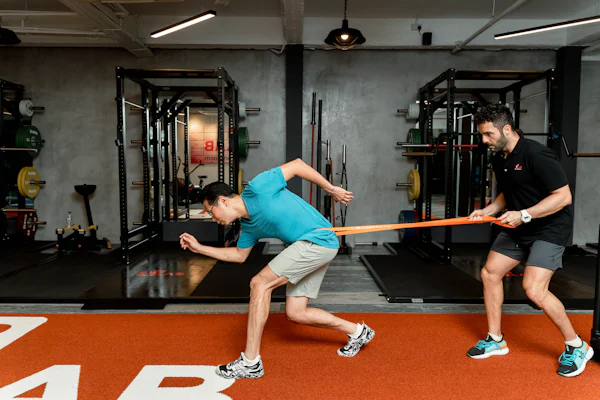
If protein is the building material, resistance training is the “keep this tissue” signal.
The evidence here is stronger than a lot of people realize. A 2025 systematic review and meta-analysis found that adding resistance exercise to dietary weight loss protected against fat-free-mass loss and improved strength compared with diet-only weight loss. Another meta-analysis across people with overweight and obesity found that resistance training alone was the most effective exercise mode for increasing lean mass, while resistance training plus caloric restriction helped maintain lean mass even as fat mass fell.
The practical floor for most readers:
2 full-body sessions per week4 to 6 hard setsper major muscle group each week- focus on squat or leg press, hinge, push, pull, and loaded carry or core work
That is a practical minimum, not an elite hypertrophy plan. But it is enough to be useful. Two consistent sessions beat the common GLP-1 mistake of planning five workouts and doing zero because intake is low and energy is unpredictable.
If you are new to lifting, a very basic plan works:
Session A
- leg press or goblet squat
- dumbbell bench press or push-up
- chest-supported row or cable row
- Romanian deadlift
- plank
Session B
- split squat or step-up
- overhead press or machine press
- lat pulldown
- hip hinge variation
- farmer carry
Run each for 2 to 3 sets, keep 1 to 3 reps in reserve, and progress slowly.
The High-Protein GLP-1 Day You Can Actually Copy
This is not a full meal plan. It is a practical day that gets you close to the target even if appetite is low.
Example day for a 180-pound person aiming for about 110 to 125 grams
Breakfast
- 1 cup Greek yogurt
- 1 scoop whey protein mixed in
- berries
Protein: about 40 g
Lunch
- turkey wrap with 4 to 5 ounces turkey
- high-protein tortilla
- sliced cucumber
Protein: about 30 g
Snack
- ready-to-drink protein shake
Protein: about 25 to 30 g
Dinner
- 5 ounces salmon or chicken
- small potato or rice
- cooked vegetables with olive oil
Protein: about 30 to 35 g
Total: about 125 to 135 g
If that feels like too much volume, the easiest swap is not “eat cleaner.” It is “use softer protein.”
Low-friction protein options when appetite is weird:
- Greek yogurt
- cottage cheese
- eggs
- protein shakes
- rotisserie chicken
- tofu
- edamame
- deli turkey
- high-protein milk
This is also why our readers often do better when they handle side effects early. If nausea is cutting your intake in half, fix that first. The best protein target in the world does not help if you cannot stand the smell of lunch.
What Usually Goes Wrong
Here are the four patterns that most often drive unnecessary lean-mass loss on GLP-1 treatment:
1. Weight loss gets too aggressive
If the scale is dropping fast but you are dragging through the day, unable to finish meals, and watching your workouts fall apart, you are probably not in the “optimal fat-loss zone.” You are just under-fueled.
2. Protein becomes dinner-only
This looks fine on a tracking app and bad in real life. Distribution matters.
3. Cardio replaces lifting
Walking is good. Cardio is good. Neither gives the same muscle-retention signal as resistance training.
4. Side effects quietly wreck intake
You do not need severe vomiting for this to happen. Mild nausea, early fullness, reflux, constipation, or fatigue can be enough to cut protein intake for weeks.
When To Worry
Some lean-mass loss during weight reduction is expected. The concern rises when it shows up with clear function loss, not just a scan number.
Bring it up with your prescriber if you notice:
- fast weight loss with obvious weakness
- trouble finishing even small protein meals
- repeated skipped workouts because you feel depleted
- persistent vomiting or dehydration
- more difficulty climbing stairs, carrying groceries, or standing from a chair
Those are practical warning signs that the program is outpacing your recovery.
Bottom Line
GLP-1 medications do not force you to lose muscle, but they do make it easier to under-eat your way into a weaker body composition outcome. The fix is not complicated, but it does need to be specific.
Start with three moves:
- Hit at least
0.55 g/lb/dayof protein, and push toward0.7 g/lb/dayif you tolerate it. - Spread that protein across
3 to 4 feedings, not one giant dinner. - Lift
2 times per weekbefore you argue about any advanced optimization.
That is the cheat sheet. If you do those three things consistently, you give your body a much better chance of losing more fat and keeping more of the tissue you actually want.
If you want more screenshot-friendly nutrition guides and side-effect cheat sheets, join the newsletter for weekly GLP-1 explainers built around what to do next.